Sunday, October 25, 2026

The Heart of Scripture (Proper 25A)


The Heart of Scripture

25 October 2026 Proper 25A

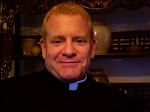
The Rev. Anthony Hutchinson, SCP, Ph.D.

Holy Spirit Episcopal Church, Sutherlin Oregon


Deuteronomy 34:1-12; Psalm 90:1-6, 13-17; 1 Thessalonians 2:1-8; Matthew 22:34-46


 God, take away our hearts of stone and give us hearts of flesh.  Amen 


I once was stuck in bumper-to-bumper traffic in a Washington DC rush hour behind a dirty pickup truck with West Virginia tags that prominently displayed the bumper sticker, “GOD SAID IT, I BELIEVE IT, AND THAT SETTLES IT.”    At the time I was a Ph.D. student at the Catholic University of America in Biblical Languages and Literatures, wrestling on a daily basis with the difficulties and intricacies of figuring out what various passages of the Bible meant when written, and, more difficultly, how they could be applied to us today.  After an hour behind that truck, staring at that bumper sticker and wondering about what the truck owner intended by pasting it there, what had been on my part a mild intellectual disdain for and amusement at fundamentalist approaches to scripture, religion, and society had morphed into a visceral rejection of all that fundamentalism at any time stands for. Often, it is about boosting vile positions, taken from a few misconstrued and isolated “clobber passages”: the subordination of women, rejecting people of religious opinions or ethnicities different from ours, or debasing the dignity and worth of gays, lesbians, trans-gender or gender non-conforming persons. 


I understand why it is so hard for most people to leave fundamentalism—it hurts.  It has a cost.  When you no longer have an absolute certitude about what God said and what God expects, you can find yourself adrift.  When the foundation you’ve based your life on crumbles, it is hard to pick up the pieces and put them back together, since there is no more picture on the box of the jig-saw puzzle that is your life.  And when you come to learn that at least some of what you were told that God expects is just so much horse manure, you can find yourself wondering at times whether there even is a God, or right and wrong.  This can be particularly sharp if you are one of those people that fundamentalists use those clobber verses on. 


The Holy Bible is a rich, diverse collection of all sorts of writings: legal codes, religious history, genealogical tables, tales of one’s tribe and family, as well as myths about the earth's origins.  In the Psalms, you find poems clearly meant to be recited in rituals. There are also personal laments and prayers. There is even an erotic poem, albeit one that the compilers of the collection later took to be religious allegory, the Song of Solomon.  This diverse collection, gathered together over a thousand-year period, contains a great diversity of morality and faith.  Frankly, we can on occasion be shocked at what we sometimes find there.  But there also are moments of bliss and ecstasy in this collection as well, and great moments of unswerving and unsparing moral clarity, in both Testaments. 


Some people say that true doctrine can only be established by proving it from the Bible.  But this misses a major point.  Because of the diversity of the Bible, you can prove almost anything from it if you are interested in just trotting out proof texts.  Witness the huge variety of denominations all claiming to base their teaching in the Bible and contradicting each other on almost every single point of doctrine. 


Today’s Gospel addresses these issues of Biblical diversity, authority, and interpretation probably better than any other passage of scripture. 


The Pharisees send a student of the Law to ask Jesus an important question of what later rabbis would call halakhah, or legal interpretation: “Of all the 613 commandments in the Torah, (365 'Thou shalt not's' and 248 'Thou shalt's’), which is the most important?  What is the heart of the Scripture?”


Jesus answers as many other rabbis did.  He quotes from the Shema‘ , the credo of Judaism that is recited every morning and evening in prayers: “ Hear, O Israel, the Lord is our God, the Lord alone. And you shall love the Lord your God with all your heart, with all your soul, and with all your might.” Jesus says that this is “the first, the most important commandment.” 


But then Jesus, without being asked, adds, “and a second commandment is just like this first one, on par with it: `You shall love your neighbor as yourself.'  On these two commandments depend the entire body of scripture.” 


He is quoting an obscure portion of the Leviticus Holiness Code: “You shall not take vengeance against, nor bear any grudge against your kinspeople, but you shall love your neighbor as you do yourself.” (Leviticus 19:18).   


This juxtaposition was first made by Jesus, something completely new. Though rabbis generations later would identify what we would call the golden rule as the heart of the Law, they do not quote Leviticus 19, link its use of the verb "love" with the use of the verb "love" in the Shema', and say that this second commandment is on par with the first. 


Jesus puts these two commandments on the same level, and in so doing bridges a great divide in the tradition of the Hebrew scriptures. 


Walther Bruggemann, in his magisterial Theology of the Old Testament, points out that throughout the Hebrew scriptures, one finds two great thematic threads. On the one side, there is the holiness of God, the separateness of God, calling for a striving for purity and ritual holiness by God’s people, for being special and set aside for God’s service.  “You shall be holy for I am holy,” we read in Leviticus, and there follows hundreds of detailed rules setting boundaries and defining categories to help achieve holiness.    On the other side there is striving for justice, for treating people, especially the marginalized, decently and fairly. 

The two themes often seem in opposition.  The priests and the Law tend to talk a lot about purity and holiness.  The prophets tend to talk about dealing with others justly, especially those most in need.  For Samuel, Amos, Isaiah, Micah and others God says things like: “I expect you to be good, not religious.”  “I hate your sacrifices because you mistreat widows and orphans.”  “All I really ask of you is to treat the poor fairly, the foreigner fairly, and to walk humbly with me.”  For the priests and teachers of halakhic law, however, God say things like, “You will be Holy for I am Holy, says the Lord.”  “You shall not pollute the land with impurity, or I will destroy you.”  “You shall drive out pollution from among your midst and separate yourself from uncleanness.”  Priests said “Don’t mix with pagans and sinners.” “Divorce your foreign wives.”  But other people told stories about people like Ruth, a foreign woman married to an Israelite who dies, and then out of love follows her mother-in-law back to her home in Israel and there, through dubious means at best, catches herself an Israelite husband and becomes the grandmother of King David. 
 
Bruggemann says that the two traditions are both important and mutually corrective. The boundaries established by the Law are what define and preserve the People of God, and allow ethical monotheism to flourish.  But if holiness is not tempered with the call for social justice, it becomes empty ritual, a mode of oppression, and dies.  On the other hand, calls for social justice in the absence of an authentic call to holiness rapidly degenerate into the most obvious self-serving form of interest-group politics. 


In today’s Gospel, Jesus says the heart of scripture is both faithfulness to a holy God and taking compassionate care of one’s fellow human beings. 


And he sees that the thing that can link these two opposites, is love. “Love the Lord your God,” not “believe in the One True and Only God.”  “Love your neighbor,” not “find a true and proper definition of who your neighbor is.”  The Psalm had said only fools say there is no God, but for Jesus, what matters is not the content of your beliefs about God, but the disposition of your heart.  Leviticus had gone on and on to define who was an Israelit and who wasn’t, who your neighbor was, and who wasn’t.  But for Jesus, that’s not the issue.  It’s what your heart makes of those about you and how you act on that.  “Love” means focusing your concern and hope on the beloved, and putting that into real actions, not picking and choosing whether they exist of who exactly they are.  Note to us recovering fundamentalists who doubt maybe the existence of God or of any moral framework:  what matters is your hope and aspirations for God and the Good.  If you get that right, everything else will follow! 


It is important to note that in the Gospels, whenever social justice is placed in conflict with ritual purity and Jesus is asked to decide between them, in every single case he opts for social justice.  For him, justice trumps purity and holiness every single time.                                                                                               


Martin Luther talked about the need for a “canon within the canon,” a recognizing of the core message of scripture so we can place all its diversity in context. Jesus’ use of these two passages as the heart of scripture shows he too believed in a canon within the canon. He knew that scripture could be abused, and that there were some nasty bits in it. He is constantly going up against Sadducees, Pharisees, and lawyers who quote scripture at him to prove points he knows are wrong.  Usually he quotes other passages, often obscure passages that reveal attitudes and feelings about the universality of the loving kindness of God, to correct these claims of “GOD SAID IT, I BELIEVE IT, AND THAT SETTLES IT.” 


Using scripture to beat up on people is just plain wrong.  Using it to affirm others is nothing but right. 


After identifying love as the heart of scripture, Jesus then underscores his approach to scripture by asking the Pharisees a very inconvenient question.  They both believe that David was the author of the Psalms, and Jesus contrasts the commonly held believe that the coming ideal king who would set things right was a "son of David" with the fact that the Psalter itself refers to the ideal king as "my lord."  Jesus' point is that there are contradictions and inconsistencies right within scripture as we traditionally understand scripture.  The authority and mystery of scripture is too great to reduce it to proof-texts, to "clobber" passages. 


In others words, don’t use the Bible to interpret love, but use love to interpret the Bible.  Does an understanding of a passage advance justice and fairness, broaden the inclusion of the excluded, or does it just serve simply as a stick with which to beat up on those different from us? 


Scripture is not so much God’s thoughts written down, as it is the field notes of God’s people over the ages.   As such, it is a treasure and must serve us as a guide. But whenever someone argues some odious position by saying “the Bible says…” we should reply at once, “and what else does the Bible say?” 

It is in this sense of the Bible as a work of the believing community inspired and led by God, despite weakness and occasional detours, that we can affirm our faith is a biblical faith. We, the Church, are the believing community that produced and is also the product of the Bible.   Only when we take as the heart of scripture the equal need to love God and love our neighbor does the book begin to cohere and serve as a guide for faith and life.  Only then do we begin to see the deep unity it is message, despite all the differences on its surface. 


In the name of Christ,   Amen


Saturday, October 17, 2026

Caesar's Coin (Proper 24A)


A Denarius of Tiberius 

Caesar’s Coin

Proper 24A

The Rev. Fr. Anthony Hutchinson, SCP, Ph.D.

10:30 a.m. Sung Mass

18 October 2026

Mission Church of St. Paul the Apostle, Crescent City CA

Exodus 33:12-23; Psalm 99; 1 Thessalonians 1:1-10; Matthew 22:15-22


God, take away our hearts of stone and give us hearts of flesh. Amen.


A lot of us have been thinking, recently, about the words of someone who learned too late to oppose the horrors of the Nazis: 


“First they came for the socialists, and I did not speak out—because I was not a socialist. Then they came for the trade unionists, and I did not speak out—because I was not a trade unionist. Then they came for the Jews, and I did not speak out—because I was not a Jew. Then they came for me—and there was no one left to speak for me." 


What most of us don’t know is that these words were written by a Lutheran pastor who had initially supported Hitler because he thought the New Testament taught him to respect the authority of the state above all.  And he did that in part because of his misunderstanding of today’s Gospel.


We live in a divided, messed up world, with plenty of tyrants leading different countries.  It is a world rife with horror and good reason to fear and hate. We tend to tolerate the brutality of political leaders as long as they have money and can put out propaganda convincing us that they are on the side of the right, the good, and the greatness of our own people.       


But none of this is new to the world.  Jesus lived in a Roman Empire led by Tiberius Caesar, who regularly committed military and police-state atrocities to maintain what he called the “Roman Peace” paid for by oppressive taxes on the very peoples subjugated by Rome. Tiberius was the supreme high priest of Roman old-time religion and morality.  But read the Roman historians:  everybody knew but dared not say he was an abusive old pervert holed up in his pleasure palace on the island of Capri, where he regularly raped and killed children for sexual gratification.  In Galilee and Judea, Jesus’s co-religionists had real problems of conscience about being part of such a morally compromised system.  It wasn’t their own country, after all.  Should they be “good subjects of the Empire” and go along to get along?  Or should they violently revolt, or just refuse to pay those taxes? 


In today’s Gospel reading, people ask Jesus whether he endorses a tax revolt.  Both the Pharisees and the Herodians who ask support the tax in their own ways.  The Pharisees use careful legal casuistry to argue you could pay Roman taxes and still keep God’s Law. The Herodians, allied client kings the Romans had installed and the Sadducees who ran the Temple, are totally in bed with Romans and themselves benefit from the taxes.


They had good cause to tell people to pay their taxes.  Resentment over them had led to anti-tax riots in the past and ultimately would lead to general insurrection and the destruction of the Jewish homeland by Vespasian and Titus in 70 CE.   The tributum capitis was applied throughout the Empire on every non-citizen living under Roman control.  Everyone was required to pay the sum each year simply for the privilege of living and breathing under the protection of the Pax Romana.  Protection money indeed.  

The Roman Procurator Quirinius had provoked a district wide revolt just 25 years or so before just by conducting a census to establish base lines for the tax. It had ended with the Romans’ crucifying en masse several thousand captured tax rebels, and was the origin of the guerilla fighters who throughout the New Testament are called lestes (bandits) or zealots.  


A Second Temple Shekel 

The scene in today’s Gospel takes place in one of the outer courtyards of the Jerusalem Temple (Matt 21:23).  It is Passover week; the city is crowded with masses of the devout commemorating God’s delivery of the Israelites from slavery in Egypt.  Political tensions are high and the risk of sudden outbreak of mob violence is great. The previous day, Jesus had conducted a demonstration in the Temple courtyard by driving out moneychangers (Matt 21:12).


The money changers, you will recall, were there to “assist” the devout by taking their unclean Roman coins and exchanging them—at a small commission, of course—for kosher Temple currency that worshippers could use to buy the animals queued up for fully assembly-line slaughter at the altar.  Jesus’ public act of driving out this commerce, needed to allow the sacrificial rites to proceed within the context of larger economy run by non-Jews, has led people to think that Jesus is a closet tax resister, come to Jerusalem on a donkey to the adulation of crowds.  Later in the week, at his hearing before Pontius Pilate, they will charge him with this very crime—promoting tax resistance against the Romans—to argue for his execution (Luke 23:1-4).  And he will die on a cross between two of those anti-tax bandits. 


It is in this tense scene that the Pharisees and Herodians innocently ask Jesus, “Is it permitted to pay taxes to the Emperor?”  

If Jesus says “yes,” he marks himself as an Imperial tool, a quisling, and a disloyal Jew, fair game for the rage of the mob.  If he answers “no,” he commits treason and marks himself for Roman crucifixion.  Malice indeed. 

Jesus says, “In what coin is the tax paid?  Can you show me one?” 

They don’t produce a Temple shekel, because for the Romans, it was “funny money” not recognized as valid currency.  They produce a Roman denarius, the coin for a common laborer’s wage for a day.  It is common enough in archeological digs from the period, bearing an image of Tiberius Caesar on its front, with the inscription, “Caesar Augustus Tiberius, son of the God Augustus.”  On its back is a picture of Tiberius’ mother Livia, wife of Augustus, seated in the posture of the Goddess Pax, or Peace:  good propaganda for Tiberius.

Jesus asks, as innocently as they had, “Whose image is that?  And whose inscription?” 

Jesus has thus caught those who had been setting a trap for him. 

By producing a Roman coin here the Pharisees and Herodians show to all that whatever their political and religious differences, they both use the idolatrous coinage of the age, and have brought it into the sacred precincts. 

Their sheepish reply as they produce the coin shows they know they have been had, “It bears the Emperor’s image and his inscription.” 

Jesus replies, “Well then, if this coin belongs to Caesar, then give it back to him!”  And then he adds, slyly, “And what belongs to God, give to God.” 

Christians over the centuries have understood this saying in a variety of ways. They usually combine Jesus’ reply to Pontius Pilate “My kingdom is not of this world” (John18:36) with Paul’s urging his readers in Rome to “be subject to the governing authorities” (Rom 13:1) and argued that there are two separate realms, two separate spheres: God’s workings versus earthly political activity, the Church versus the State. This view became almost universal within Christianity after the Emperor Constantine, who made Christianity the state religion supported by force of law and arms.  Many argued that the state is an empire operating within a greater empire, God’s kingdom, and that Christian rulers gained their legitimacy from Church consecration.  They said this with straight faces, unwilling to notice the unedifying fact that it was the earthly rulers who usually dictated terms to the Church under the arrangement.

Look at the results of such an interpretation. The cross, previously a sign of Jesus’ passion, became fused in people’s minds with the Sword of Constantine, wielded under the phrase In Hoc Signo Vincis, “With this sign, conquer!”  IHS for "IHSUS, Jesus," became IHS "In hoc signo." Christians murdered Christians in riots and even wars over exquisitely fine points of Christology, and exiled whole communities to maintain doctrinal purity and unchallenged political power. In the East the leading churchmen became creatures controlled by a corrupt and oppressive Byzantine court.  In the West, The See of Rome, claiming an increasingly powerful role as monarchial ruler of the Western Church even as the power of the West’s earthly rulers declined, eventually became such a symbol for corruption, abuse of power, and oppression that some, like Henry VIII and Martin Luther, actively embraced the idea of the Church subservient to earthly leaders.   The low point was the prostitution of the Church in Germany—both Protestant and Roman—in support of the Third Reich.  The guy who wrote those words at the start of my homily initially supported Hitler because he was, after all the God-appointed leader of the nation, and because he persecuted people whom he had been taught to see as enemies of God.  But he soon found himself arrested when he put took issue with the Nazis turning the whole church into its own hateful creature.  The kingdom within a kingdom of the Constantinian settlement has become a Reich within a Reich! We see the same prostitution of the church today in our country in Christian Nationalism, held by some evangelicals as a biblical teaching (!) and the ideology behind the current administration’s “Project 2025.”

But this idea of two spheres is not what is intended in Jesus’ “render unto Caesar” saying. 

Pre-Constantinian Father Tertullian, in De Idololatria, points out that when Jesus says to give the coin with Caesar’s image back to Caesar, he adds “give back to God what is God’s.”  Tertullian asks, “What is it that has God’s image? Why, human beings, of course, since ‘God created human beings in his own image.’” 


In other words, it is not a question of two spheres, but one alone: God’s.  We—all that we are, all that we will become—are the coin that bears God’s image and which we must give back to God.  Caesar’s coin with its image, because it distracts from this real issue, is thus labeled idolatry. 

When Jesus says “What belongs to God” he probably has in mind a lot more than just us.  As Psalm 24:1 puts it: “The earth is the Lord's, and all that it in it; the world, and everything that lives.” The whole natural world belongs to God as well.   Jesus here rejects the idea of two spheres: for him, there’s only one.   
 
“Go ahead and give Tiberius that coin, since it plainly belongs to him. But there are bigger fish to fry—like how we pay back to God what is God’s!”  Don’t get worked up over paying taxes, whether out of an outraged sense of political insult (a loss of “liberty”) or morality (not committing “idolatry.”)   If you are already up to your neck deep in sewage, don’t suddenly get all sentimental about keeping your face clean.


Jesus knows that we are living in occupied territory.  Not just Romans occupying Palestine. The demonic Powers and Dominions, the evil systems that reign here, are what truly occupy God's good creation. And he says, do what you need to do to get by under such an occupation.  But don't let it fool you one bit. Use the coin, but don’t believe the propaganda on it.  

The problem is that money stands in for so many other things for us.  It objectifies value and worth, work, and honor.  “How much is that person worth?” we ask, oblivious to how we have reduced the person to mere possession of pieces of the economic pie.   “I have done right by her,” says the man about to be divorced for emotional abandonment, thinking only of the money he has sent her way over the years.   “Oh, he doesn’t work, then?” we ask about a stay-at-home father, just because his work isn’t quantified by measurable currency units.  The proverb says it all, "Money is Power." 

Jesus will have none of this.  

Talking about money and devotion to God elsewhere, Jesus says, “No one can serve two masters.  Either you will hate the one and love the other, or you will be devoted to the one and despise the other. You cannot serve both God and money.” (Matt 6:23-25).  

 
Money is not the only idol out there.  Political programs promising greatness or redemption, whether from the Right or the Left, have a way of standing in for other issues, just like money. And they can be as corrupted as money can be. What matters for Jesus is an open-hearted trust and devotion to God, and the acts of mercy and social justice that result from this.  Look at the person in front of you and treat them with respect, if not kindness. 

  
The world we live in is occupied territory.  That’s why it is so messed up.  We are all in Caesar’s game, and have to pay in Caesar's coin, play by Caesar's rules.  But as Jesus said after his arrest, "those who live by the sword die by it."  There is so much more at stake, a much more important game afoot. 


Give back to Caesar what is already his.  But give to God everything. 
 

In the name of Christ, Amen.

Sunday, October 11, 2026

The Parable of the Invitation (Proper 23A)


The Parable of the Invitation

11 October 2026: 9a.m. Sung Mass

Mission Church of the Holy Spirit, Sutherlin, Oregon

Proper 23A

The Rev. Fr. Tony Hutchinson, SCP, Ph.D.

Isaiah 25:1-9 Psalm 23 Philippians 4:1-9 Matthew 22:1-14


God, give us hearts to feel and love.

Take away our hearts of stone and give us hearts of flesh. Amen.


What in the world was that Gospel reading about?  If a king invites a whole lot of people to a party and he’s so scary that everyone finds some lame excuse to get out of it, there’s something wrong with that king.  And if you dragoon me in from the street as a party stuffer to fill in for all the declined RSVPs you have received, only to humiliate and shame me for not wearing just the right clothes, and then throw me out, there’s something the matter with you, not with me.   


Matthew’s Jesus starts it with “the kingdom of heaven is like….”  But remember that this isn’t saying that king is somehow God.  The phrase means something more like “Let me tell you a story that will help you see how God rules over us and how God doesn’t.”   


The king here is clearly a psycho, totally self-absorbed and narcissistic.  This is how Nero, Caligula, or some petty but nasty dictator in a banana republic, or unfortunately now our own President, treats party guests.  By seeing how bad such “hospitality” is, we see maybe what God’s invitations are like by contrast.  


Matthew was written just after Vespasian destroyed the Jewish homeland and its Temple in 70n CE.  The Gospel writer suffers from serious post-traumatic stress syndrome.  Matthew tries to come to grips with that earth-shattering event by looking at Jesus’s parables and applying them to his own day:  Jerusalem was destroyed, he says, because Jesus was crucified there.  In trying to make Christianity a little more respectable in Roman eyes, he lays the blame of the crucifixion on the Jewish leadership and mobs, not on the Romans, even though crucifixion was not a Jewish form of execution, but a Roman one specifically reserved for rebels against the Roman Imperium. 


Matthew here has taken a parable from Jesus with a single point of comparison and added all sorts of details to turn it into an allegory, changing its meaning in the process.  Like all the parables in the last few weeks in the Lectionary, the earlier form of the parable had one meaning, one critical of the careless rich and powerful of Jesus’s society, the very kind of message that got him killed by the Romans.  Matthew allegorizes the stories, adds details, and interprets them as moral admonitions and explanations for his own day. 


The powers at play in these stories are not attractive. In one (Matt 20:21-35), a landowner pays day-laborers such a pittance that he cannot be bothered to prorate their wages for the amount of the day they had worked, and then blames the ones who complained they had worked longer for being stingy.  In another (Matt 18:21-35), a petty king forgives a subordinate a 100-million-dollar debt so he can look good and hide his own corruption, and then condemns that very subordinate to endless torture because he didn’t see the need for such PR methods and wouldn’t forgive a sum paltry in comparison to someone else.  In another (Matt 21:31-46), an absentee landlord applies squeeze on the tenant farmers working his vineyard, who resort to violence to defend themselves, thus getting landlord’s goons and his own son killed in the process so he ends up annihilating all the tenants.  In today’s parable (Matt 22:1-14), a psychopathic ruler throws a dinner party that everyone rightly is afraid to attend.  He then dragoons passersby on the street as party stuffers, and then punishes them when they show up underdressed.  Matthew has turned all of these into allegorical dramas explaining the dynamics of Jewish-Gentile relations in the Christian Church in Syrian Antioch, and making some sense of the Temple’s destruction: Jewish members of the church shouldn’t resent the grace shown gentile coverts.  Gentiles coming late to the party might not be expected to be circumcised or keep Jewish Law, but at least should dress right by avoiding things that were totally revolting to Jewish sensibilities. The destruction of the Temple was not a random misfortune, but punishment from God.  In Matthew’s reading, the power in these parables seems to be God, and those fairing ill seem to be Matthew’s Jewish compatriots who declined, wholly or in part, Jesus’s invitation to welcome God’s Reign.  Both God and the Jewish people come off poorly in the process.  


Today’s parable, like last week’s, is preserved not only in Matthew, but also in the Gospel of Luke and the non-canonical Gospel of Thomas. If you carefully compare these, it is clear that the parable on Jesus’s lips originally ran this way:


“A rich man gave a great dinner to which he invited many guests. When all was ready, he sent his servant to summon the guests. But one by one, they all gave excuses for not coming. Hearing this, the rich man commanded his servant, ‘Go out quickly into the streets and alleys and bring in anyone you find. I want my great hall to be filled for the banquet.’”


Most of Jesus’ audience knew that a great banquet was a big scriptural image for God’s future saving act.  Even though many passages said, like today’s Isaiah reading, that this banquet would be for all nations (Isaiah 25:7), many teachers—including some of the wealthy criticized in Jesus’ parables
¾said that it would be an exclusive event limited to God’s elite people only. 


Jesus replies to such a stingy image of God with parables. He points to the weather and says that God gives his rain and sunshine to both good and bad people alike (Matt. 5:45).   He points to families and notes that when children ask for bread to eat, parents do not give them stones, or when they ask for an egg to eat, do not give them a scorpion, or when a fish, not a snake. “If even average parents try to give their children good things, how much more generous will God be?” (Matt. 7:9-10; Luke 11:11-13)

And Jesus’ actions match his words. He regularly eats and drinks with people declared contagiously unclean by his religion.   He welcomes them.   He tells people to accept God’s invitation without fear or anxiety.  “Don’t worry about how you’re clothed,” he says, “the wild flowers are prettier than King Solomon all decked out, without any worries at all” (Matt 6:28-29).  When he sends the apostles out, he tells them to just take one change of clothes and no more, to accept people’s hospitality, not be picky about their food, and eat whatever their hosts give them, presumably whether it’s acceptable to the religion or not (Mark 6:8-10; Luke 9:3-4; Matt 10:9-10).  He asks Martha, driven to distraction about getting every little detail of her dinner for Jesus just right, whether she might relax a little, and focus on the one thing that will give her joy, Jesus’ word, just like her sister Mary (Luke 10:38-42).  


Jesus’ original parable here tells the story of the host forced by RSVP “regrets” to drag in people from off the street to say God’s banquet is open to all.  It’s all about God’s kindness, God’s grace.  But Matthew adds all the nasty details about a psychopathic king and invitees scared to death of getting things wrong, and that poor guy without proper wedding clothes thrown out into the street bound hand and foot.  Matthew is trying to explain that no matter how gracious God’s invitation, we need to be attentive and intentional in accepting it.  Matthew’s image of having proper clothes for the wedding becomes in the Gospel of Thomas a symbol of whether we have actually truly accepted God’s gift.  This corresponds to a little-known fact about Jesus’s culture: lords who threw big parties with dress codes beyond the means of their guests were expected to offer them proper dress as part of the invitation.  So those folks showing up dressed wrong declined this offer of hospitality just as much as the folks who gave such lame excuses as a reason for RSVP-ing no. 


I have to tell you, we live in a messed-up world full of leaders like that psychopathic king. And we seem to respond by being just like them.  I was horrified in reading the New York Times this morning that threats of death and violence against our political leadership at the national, state, county, and city levels are at an all-time high, both from the right and the left.  And we have that odious fellow who serves as secretary of defense but styles himself as the secretary of war saying he plans on live-streaming the firing-squad execution of a mass-murderer in December.  I won’t even talk about his boss. We are led by Nero’s and Caligula’s, and are increasingly becoming like them.  What a broken, broken mess we are, having Made America Grotesque Again.  So when Jesus calls us to joyous acceptance of God’s gentle invitation, and asks us to extend it to others, especially those who hate us and whom we find ourselves hating, that is something really, really important. 


At Caesar’s party, where all is fear and stress, if there is anyone like that guy thrown out on the streets, it is Jesus himself.   Jesus was taken outside the city wall and nailed to a cross because he just was not up to snuff when it came for giving proper respect to Rome. 


God is a kind and loving host, and invites us all.  There is no need for stress or anxiety.  The good news in this is that God’s invitation is not like Caesar’s.  God is not a psycho killer.  We need not fear. 


But in order to accept God’s invitation, we do have to be open to receive it. St. Augustine says, ‘God gives where He finds open hands.’ You can't receive the gift if your hands are already full, or are clenched tight.

In yet another parable, Jesus compares God’s kingdom to a narrow path and a tight gate, which at any given time only a few can manage to squeeze through (Matt 7:13-14). This is because in order to get through such a tight fit, people have to be willing to abandon all the baggage they are carrying, whether riches, resentments, self-will, sins, or even what appears to be good things if they are getting in the way. 


What does accepting grace, freely offered, look like in practical terms? 

It looks like me admitting that I am helpless and hopeless. It sounds like the sincere phrase “I am sorry and I humbly repent.” It feels like Martin Luther’s heartfelt cry when barely missed by a thunderbolt, “I am yours, Lord; Saint Anna, help me. I will become a monk!”  

I myself have known God’s grace.   Once for me, all was hopeless and helpless, through my own “thoughtlessness, weakness, through my own deliberate fault.”   I found that I had to accept my own powerlessness and turn it all over to God. And keep doing that, each day.  Gradually, steadily, God worked wonderful changes. I am still far from what God wants. But I live each day in gratitude.

I know that many of you have had similar experiences. Some of you have told me your stories.   We need to continue in faith and gratitude, and share the invitation to God’s splendid party through our actions and words.

If you have not had such an experience, then please listen to this call to God’s banquet, you random passerby on the street, and come it to the party.   The tickets are free. But they are not cheap. Once in the door and settled at the table, we must continue to respond to Jesus’ beckoning call.  Without sinking into fear or anxiety, let’s give some thought to how we’re dressed. This means amending our ways, making up as far as it is possible for our misdoings.  It means trying to be our best selves, being a bit better today than yesterday, this year than last. 


The banquet is priceless, the bread the finest, and the wine, a vintage that makes our hearts gladder than any other. Come to the banquet; don’t worry whether you are worthy.  Don’t about your clothes.  Don’t be afraid. Just come.    


In the name of Christ, Amen.