Showing posts with label stewardship. Show all posts

Sunday, November 11, 2018

Offerings (Proper 27b)


Offerings
11 November 2018
Proper 27B
Homily preached at Trinity Episcopal Church
Ashland, Oregon
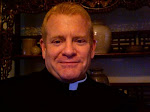
The Very Rev. Fr. Tony Hutchinson, SCP, Ph.D. 
8:00 a.m. Said Mass; 10:00 a.m. Sung Mass

God, take away our hearts of stone, and give us hearts of flesh.  Amen

Each time we celebrate Eucharist, at the time when we present the bread and the wine, as well as monetary gifts, at the altar, the priest gives a sentence of scripture or a bidding.  On page 376 of the Prayer Book, you can find several that the priest may choose from: 

Offer to God a sacrifice of thanksgiving, and make good your vows to the Most High.    

Ascribe to the Lord the honor due his Name; bring offerings and come into his courts.    

Walk in love, as Christ loved us and gave himself for us, an offering and sacrifice to God.    

I appeal to you, [beloved], by the mercies of God, to present yourselves as a living sacrifice, holy and acceptable to God, which is your spiritual worship.   

If you are offering your gift at the altar, and there remember that [a person] has something against you, leave your gift there before the altar and go; first be reconciled…, and then come and offer your gift.  

Let us with gladness present the offerings and oblations of our life and labor to the Lord.

The Prayer Book also allows “other suitable passages of scripture,” among which is one of my favorites, from the 1928 Prayer Book, here in modern language: 

“The one who sows little shall reap little; the one who sows abundantly shall reap abundantly.  Let everyone follow their own heart, not grudgingly, or forced to do so, for God loves a giver who is cheerful.” 

Today’s Lectionary readings are all about offerings and sacrifice.  The Gospel and Hebrew Scripture tell stories of women who give their all: the widow of Zarephath feeds the prophet Elijah and finds that God provides for her for years; the widow in the Temple gives her last remaining coins, and serves for Jesus as an example of abuse of the faithful by religious leaders.  Hebrews talks about how Jesus Christ as a metaphorical high priest is better than any real or historical one, and his sacrificial offering the real thing, where all others are but shadows and types pointing to it. 

Sacrifice or offering was at the heart of the religious life of Israel’s Temple.  The basic idea of an offering is expressed in the word terumah: a lifting up, a gift given with a heave. 

Sacrifice served several uses: making up for past misbehavior, cleansing or purgation of ritual contamination, reconciliation, expression of gratitude and thanks.  It sought to repair and strengthen our relationship to God through that most simple of human acts, sharing food.  Some offerings were sacrifices with blood where the animal was burned and the tasty bits shared by the ministers.  Some were of incense. Others were of grain and oil.  In all these offerings, you shared with the deity and the altar servers. 

Prophets at times spoke out against sacrifice considered as some kind of cheap bribery of the Almighty.  They put these words on God’s lips:  “If I were hungry, do you think I would ask you?  All the flocks of the fields are mine.  Do you think I drink the blood of goats or cattle?”  “I demand obedience, not sacrifice.”  “The sacrifice I demand is a humble heart and a contrite spirit, a sacrifice of praise and thanksgiving.” 

Jesus criticizes the Temple ritual and its rulers.  The system is corrupt, a means by which the rich devour the poor.  But he still honors the act of offering itself. 

American Sign Language’s sign for “sacrifice” makes clear the idea:  taking both hands as if they hold something, then turning them both up, open wide, as if to say “I let go of this.  It’s all yours.”  The essence of offering is letting go of control, and giving up something of yourself with no expectations.

That’s why Hebrews says Jesus offered himself as a sacrifice, even though Jesus was never a member of a priestly family in the Temple.   Hebrews is using a metaphor:  what Jesus did for us in dying is to give himself for us.  He thus accomplishes what Temple sacrifices sought to do:  he reconciles us to God, drives away our sins, and makes us whole.  By giving himself.  By offering. 

Holy Eucharist is a “sacrifice of praise and thanksgiving.”  In it, we offer bread and wine, product of the created world and of human hands, as tokens of what Jesus accomplished.  In the act of offering, it becomes a communion, or mutual sharing.  That is why we remember Jesus’ words at the last supper, “this is my body, this is my blood.”  And though Jesus died for us only once, as said in today’s lesson from Hebrews, the bread and wine, thus offered, thus sacrificed, are our communion, or sharing, in this. 

Offering, giving, sharing—all these are ways we build closeness with one another.  It is how we build closeness to God: not because God needs to be bribed or placated, but because we need to put our things in second place after our love.  It is all about hospitality and generosity, about sharing and welcoming.  It is a basic spiritual rule and guideline.  It is one of the ways we follow Jesus and serve as his body in the world. 

We are in Stewardship pledge season.  The temptation is always to preach the Widow’s Mite as an example Jesus gave us to follow: she gave her last penny, and so we should be willing also to give until it hurts.  But that is decidedly not what Jesus is getting at here.   His point is that this poor woman is so controlled and brain-washed by the teaching of the scribes—those devourers of widows’ houses—that she gives willingly all her livelihood while those who oppress her give only a tiny portion of their abundance. 

For green lampshade guys, the widow’s mite is laughable in comparison with the lordly sums of the scribes.   But Jesus says her contribution is greater than all of theirs.   She sacrificed while they did not.  Hers was an open-handed offering, while theirs was a small gratuity. 

The Widow’s Mite, if applied to Stewardship campaigns, if anything, talks about the Church’s responsibility to be open in its accounts, responsible in its use of contributions, and fixed on the task of helping and standing with the poor and the oppressed.

It also talks about the real issue at heart in our giving to the Church.  It is not about trying to impress others.  It is not about soothing a bad conscience or boosting a bad self-image by doing one more great, praiseworthy act.  It is not about people pleasing, or even God-pleasing.  Our gifts and pledges to the church should be an offering, not a tip.  They must come from a thankful heart, a vision that the Church’s ministry is God’s work, and a sense that all that we enjoy comes as a free gift from the Parent of us all.

Some of us tithe, or pay a tenth of our increase, as a way of trying to put offerings first, like the widow of Zarephath, whom Elijah asked to give first and then worry about her short larder.  God did and does provide, after all.   

Our giving to the Church must be an act of community, where we draw nearer to each other, not an act of competition or objectification, where we draw away from them.  It must be an act where we take responsibility for God’s work, not where we try to take control of it.  

When all is said and done, it is about faith.  John Wesley famously used to inquire into the spiritual health of the faith communities he had founded when he would visit them.  A regular question he would ask, to help them determine the quality of their faith was this:  has your faith affected your pockets?  If it hasn’t, then it probably is weak and feeble. 

You are hard-working, faithful, and generous.  You are already giving much to show God’s love in the world.  I invite you to continue in this path of gentle wisdom.  We are set as stewards, or temporary managers, of God’s abundance and creation. God the Giver is joyously generous, as we must be.  Trinity is a special loving community, and its varied ministries show God’s love in creation.   I invite us all pray for the courage to break out of our insecurity and fear around money into the world of an abundant God.  Open our hands, heave up our gifts, and bring offerings into God’s courts with praise. 

In the name of Christ, Amen.  

Sunday, August 23, 2015

Faithful (Proper 16B)


Faithful
Proper 16B
23 August 2015; 8:00 a.m. Said Mass and 10:00 a.m. Sung Mass
Homily Delivered by the Rev. Fr. Tony Hutchinson, SCP, Ph.D.
at Trinity Episcopal Church, Ashland, Oregon

God, take away our hearts of stone, and give us hearts of flesh. Amen.

Most of us have heard the witticism about the Episcopal Church, how it is “Catholic lite”:  All the pageantry and none of the guilt.   

What many of us don’t realize is that historically, we have also been seen as “Protestant lite.”  Calvinists accused us as being “Arminian,” or “semi-Pelagian,” talking about salvation through grace, but still thinking that our works matter. Puritans felt that we were crypto-Papists. Today’s evangelicals think we have sold our biblical heritage for a mess of social justice potage. 

I have always thought such characterizations a cheap shot.  Christianity as practiced in the Episcopal Church has nothing “lite” about it, however much we Episcopalians might want this to be so. 

When I first came to an Episcopal Church and stayed after for coffee hour, I was struck by how measured and restrained it all was: bread and butter cucumber sandwiches with the crust trimmed off, some coffee for the real addicts, but mainly weak black tea with a cloud of milk.   Not at all like the hearty church dinners of my Mormon youth!   The liturgy had none of the sappy sentimentality and maudlin moralism I had grown up with, where church services aimed at making you feel convinced, getting you committed: follow the commandments, shoulder your responsibilities to God and others.  You needed to “bear your testimony,” give a public and heartfelt affirmation of your certitude of the faith.  This may have worked for many, but it no longer worked for me. 

One of the things I found most appealing about Episcopalianism was its restraint.  It seemed thin broth indeed compared to what I was used to.  And I was ready for thin broth.

We Anglicans want to have things moderate, rational, balanced and done in good taste.  Remember the 18th century Bishop of London, the Rt. Rev. Dr. Edmund Gibson.  He blasted John and Charles Wesley’s call for a faith of the heart: “Enthusiasm, Mr. Wesley, enthusiasm! This simply will not do!”

Most of us Episcopalians are refugees from some kind of pastoral or ecclesiastical abuse elsewhere, whether in Biblicist churches, sternly dogmatic churches, censorious churches, churches with traditions of unbalanced and immoderate community life and doctrine. So we are cautious. 

But here’s the thing:  faith has to be strong and central if it is going to make any difference in our life.   A faith that does not demand our all is not strong enough to save us.   That’s just the way we are hardwired. Moderation taken to extremes is itself deadly—to emotions, to relationships, to community, and to emotional health.    Religion without passion is vapid: “enthusiasm, Mr. Wesley, it will not do!” 

I knew I had become an Episcopalian when I quit my old Church choir and joined the choir at All Saints’ Chevy Chase.  I was grateful for Episcopal moderation, but I still needed sustenance, affirmation of my faith:  Real faith in Christ, not merely an aesthetic or intellectual experience; A faith that made me try to be a better person, that demanded sacrifice and consecration; One that touched the core of my heart, if I were to have any sense of purpose at all. 

If it had only been about escaping a faith I could no longer stomach, I would have lasted as an Episcopalian for just a few months.   It was only later, after I became accustomed to the rhythms of the prayers, the rites, the hymns and choir anthems, and liturgical seasons, that I realized just how rich this new soup was: rich at a deep level of sentiment and thought, not on the surface of sentimentality and slogan, and rooted in the truth at the heart of things, not the external authority of the teaching office of the Church.  It focused on Jesus, not the Church.  And it was this rich, thick and at times sensuous worship and community life that rebuilt my heart.  

It’s all about faithfulness in relationship, in community, the subject of today’s scripture readings.   Joshua tells his people that if they reject Yahweh, it really doesn’t matter which god of the land they follow.  “Stick with God,” he says.  And they do.   In the Gospel, people who have been following Jesus reject him because his teaching is getting just too weird.  He asks his close disciples if they are going to leave too: Peter replies “we’re sticking with you, no matter how weird, because we hear in you there is eternal—that is the timeless, reliable, unchanging—life.  Jesus in faithful, so Peter must be faithful.  Ephesians tells us to put on the armor of God so we won’t be shaken by the things that destroy our relationship with God and the Church. 

Faithfulness and reliability is a key part of relationship.  It’s in our hard wiring.  This seems to be lost to commentators on the sad story from this week’s news: a hookup website for intending adulterers was hacked and the list of subscribers published, among them, a famous young reality-TV evangelical husband of an archetypically large family.  People are titillated, and point out the hypocrisy and stupidity of those involved.  But few note the true tragedy, the horrible fact that so many misunderstood themselves and the nature of human relationships so profoundly that they pursued such things.  If we want to have healthy relationship in loving marriage, it means being faithful to your spouse.  Wandering, as exciting as it may seem, in and of itself damages relationship, even if your spouse never hears about it.  You yourself are changed by your actions.  Emotional distance and manipulation are inserted into what had been, if not joy, then something aspiring to it.   

It is the same with us and our relationship with God, not because God needs to be faithful (He is, by his very nature), but because we need to be.

I have learned many things from visiting the sick and the dying and giving last rites.  Most important is this: The people who keep their relationships with others, including their relationship with God, in a little box off to the side, controlled and managed, are, in the end, left with nothing.   You may want to keep things moderate, balanced, and reasonable.  But debilitation, dementia, and death rob you, little by little, of each and every one of the things you put before relationships and faith.  The more focused on balance, control and management a person is, the greater their bewilderment and fear, even terror, at death. 

Those who realize that their relationships are the key thing do better.  And those whose relationship with God is the core of their relations with others do best.   God is the one relationship partner who is wholly faithful, and who cannot be taken from you.  Those who believe that God and love must trump all other concerns are those who in the end are left with an abiding sense of calm and hope at death. 

When you put faithfulness in relationship, particularly in relationship with God, first, other things, the transient and impermanent things, take care of themselves.  “Seek first the reign of God and its justice,” says Jesus, “and everything else will fall into place.” 

We can usually tell when we are putting other things first.  When they come up in the context of more central things, we feel uncomfortable, get angry or annoyed, or simply want to say, “I’m outta here!”   This is a good sign that this is a place where we still want to maintain control, where we have not let Jesus in to heal and transform.   

Politics from the pulpit is a one example.  Partisan activism from the pulpit is pastoral abuse and should be discounted out of hand.  But preaching the Gospel and applying it to the questions of the age is what the prophetic voice is all about.  And if we can’t abide what prophets are saying, we just haven’t let God into that part of our life.

Another example is letting our tastes and preferences dictate how we pick and choose our church.  The teaching must be just this way, the liturgy that way.  The music must be just so.  If not, I’m outta here.  Boutique religion, consumer Christianity is spiritual death. 

Money is another.  Trinity’s financial response campaign is coming up in a little more than a month from now.  I know as well as anyone here how uncomfortable talking about money at church can make us feel.  We just don’t want to hear that the Episcopal Church teaches that the Biblical tithe—10% of our income—is the minimum standard of giving for building God’s kingdom.  We squirm when told that everything we have is from God, and we need to give back.  It all seems so immoderate, so extreme, so unbalanced, too much like cheesy televangelists hucksters or cold-hearted organization men in green eye-shades who say God is behind their fund drive. 

Jesus criticized religious institutions that bleed people dry with a promise of blessing from God: that’s what the widow’s mite is all about.  But here’s the deal: if we cannot face the issue, or talk about it with an open heart and mind, that’s a warning sign.  The real issue here is generosity and spiritual devotion, and wanting to avoid it should tell us that this is an area in our life as yet untouched by Jesus, untransformed by grace. 

I am not saying that there is a single payment schedule or standard for all.  And I am not saying that the Church is the same as God and Jesus and the kingdom.   All I am saying is that letting such talk unhinge us or make us so uncomfortable that we are ready to walk, at least metaphorically, well, it’s like those Israelites who didn’t follow Joshua and Yahweh, and like those followers of Jesus who stopped following him because they just couldn’t bear him talking about his body and blood as food, disgusting cannibalism.  It is a sign that we have put our faith and religion in a little box off to one side, and that maintaining control—not squandering our annuity, keeping our nest egg solid, or aiming at a certain standard of life—is more important to us than relationship.   Make no mistake: this is about relationship, and the gratitude and generosity that must be part of a healthy and faithful relationship. 

Jesus bids us follow him, and always seems take us to places that are new and uncomfortable.  And that is true whether we are talking money stewardship, society and policy, liturgical style, or the interpersonal stress of parish politics writ small.   The more passionate we are about other things, the greater the risk. We must not abandon Jesus, or lose the faith.  We must be faithful.  For his words are life that lasts forever. 

In the name of Christ, Amen. 

Sunday, November 11, 2012

Long Robes, Long Prayers (Proper 27B; Stewardship)


“Long Robes, Long Prayers”
11 November 2012
Proper 27B
Homily preached at Trinity Episcopal Church
Ashland, Oregon
8:00 a.m. spoken Mass, 10:00 a.m. Sung Mass

"Teaching in the temple, Jesus said, "Beware of the scribes, who like to walk around in long robes, and to be greeted with respect in the marketplaces, and to have the best seats in the synagogues and places of honor at banquets! They devour widows' houses and for the sake of appearance say long prayers. They will receive the greater condemnation."
He sat down opposite the treasury, and watched the crowd putting money into the treasury. Many rich people put in large sums. A poor widow came and put in two small copper coins, which are worth a penny. Then he called his disciples and said to them, "Truly I tell you, this poor widow has put in more than all those who are contributing to the treasury. For all of them have contributed out of their abundance; but she out of her poverty has put in everything she had, all she had to live on." (Mark 12:38-44)

God, take away our hearts of stone, and give us hearts of flesh.  Amen

I remember the moment when I, as a young man, lost my idealism about the U.S. system of government.  I was a Ph.D. student at Catholic University in Washington, D.C., and worked nights sorting Congressional mail to help pay the bills for our growing family.  I worked in the House Post Office as a patronage employee, and I needed that job so I could go to classes during the day.  One night, I inadvertently witnessed a medical emergency involving a federal crime.  I called 911, but by the time the medical team arrived, the evidence of the crime—the drug works scattered about the men’s room floor and the hypodermic dangling from an unconscious co-worker’s arm—had been cleaned up, evidently by one of my co-workers while I called the emergency responders.  At the end of the shift, I was told to wait. The House Postmaster wanted to talk with me.  He asked me what happened, and I told him.  And then he told me that I had only seen my coworker unconscious, but that there had been no drug works or needles.   If I were questioned by the capitol police, he said, I was to leave out any mention of these because they simply had not existed.

I looked at him in shock. I had no intention of perjuring myself. “There are bigger issues here, sir.  We’ve got to get this guy help for his addiction.  You can’t suppress this just to maintain appearances.”  And then he said, with complete conviction, “Tony, don’t be naïve.  The only thing that matters is appearances.   The hospitalized guy is the son of a key majority staffer and is under the direct patronage of the Speaker of the House.   If you say anything that would embarrass him or cause political problems, I will make sure you lose your job and never work again in D.C.”  

“The only thing that matters is appearances.”  With those words, the scales fell from my eyes and I saw how corrupt and self-serving much of Washington life was. I happily did not lose my job.  The Postmaster saw to it that I was never questioned about the matter.   It would take several years before I regained some trust in the system.  This very Postmaster was implicated in a great embezzlement scandal.  He and his office staff were sent to federal penitentiaries for long sentences. 

“The only thing that matters is appearances.”  This cynical take on the world is common enough, and is what today’s Gospel reading is about.  Jesus criticizes those who specialize in religious law, who desire “to walk about in long robes (think: tailored suits, name brand accessories), to be greeted with respect in the marketplace (presumably where anything can be bought for a price), to have the best seats in houses of worship (that is, those most front and center, where everyone can see you), and seats in banquets held in honor of them.”  Jesus adds that the menus at such banquets of honor include something other than food:  “they devour the houses of widows.” And then he gives the real reason for their piety and worship, the long prayers that go with their long robes, “they do it all for appearance’ sake.”  While they appear to be buying influence, honor, power, and the respect of others, he concludes, all they really are buying is “more and more condemnation.” 

“The only thing that matters is appearances.”  This is not the same thing as having a decent respect for the opinion that others may have of you and being open to their suggestions and correction.  There are many, many things more important than appearances.  Integrity, honesty, kindness, assistance and love are values in and of themselves, wholly apart from appearances.  These higher values are only cheapened and demeaned if they are put into the service of trying to gain the approbation of others.

The difference between merely keeping up appearances and actually doing the right and honorable thing is this—keeping up appearances is done to control others, to manipulate them.  It objectifies them and in the process separates you from them, no matter how much closer to you they may seem.   Being open to the impressions of others is an act of community, and brings you closer to them.  

I have to admit that there is a certain allure to embracing “image management.” I grew up wanting the approval of my parents, my teachers, my sisters and brothers, and my classmates.  I based my good view of myself on the view that others had of me, and so I was always hungry for approbation, praise, and applause.  Good grades, admiring comments, ego strokes.  By the time I was a young adult, I was very much a people pleaser. 

My run in with the Postmaster forced me to reconsider my people-pleasing ways.  In the end, I realized that what other people think of me is, strictly speaking, none of my business.  But this did not come quickly. 

Just after this I became a practitioner of public diplomacy for the U.S.  My job was to mold public opinion overseas in the favor of my country, through press relations or through cultural, educational, or professional exchanges.  I had to advance my career as a Foreign Service officer through maintaining my supervisors’ and colleagues’ good opinion of me and my work. 

I learned that openness, honesty and effectiveness were great tools in managing the opinions of others.    But when I treated these qualities simply as tools for making a good impression, in reality they became increasingly impossible to reach.

In Lincoln’s famous phrase, you cannot fool all the people all the time.  Well, you can’t please all the people all the time either.   If your self-esteem is based on praise from others, you will be doomed to always feeling like a fraud, always having to catch up or cover up, never at peace, always struggling to manipulate your image and spin things. 

Jesus in the Gospel today says that such manipulation of others goes hand in hand with exploitation of others.   What the scribes are eating at their feast of honor is actually the houses of widows. 


Jesus juxtaposes this image of alienation and oppression with the view of a poor widow giving her last penny to the temple treasury. 

We are in Stewardship pledge season, and the temptation is always to preach this text as an example Jesus gave us to follow—the Widow’s Mite, the great example to us.  She gave her last penny, and so we should be willing also to give until it hurts.  But that is decidedly not what Jesus is getting at here.  

His point is that this poor woman is so controlled and brain-washed by the teaching of the scribes—those ultimate image managers, those complete maintainers of appearances, those devourers of widows’ houses—that she gives willingly all her livelihood while those who oppress her give only a tiny portion of their abundance. 

In a world where “all that matters is appearances,” the widow’s mite is laughable in comparison with the lordly sums of the scribes’ contributions.   As things really are, her contribution is greater than all of theirs.   She sacrificed while they did not. 

The contrast is very much like that in Jesus’ story of the Pharisee and the Tax Collector—both go and pray, but the Pharisee thanks God (loudly, for an audience) that he is not a sinner like all those about him and that he gives all sorts of devotions and money to the Temple.  The Tax Collector stands off by himself, can’t even bring himself to lift his eyes, and prays, ‘Have mercy on me, a sinner.’  The Tax Collector, says Jesus, went away from the Temple closer to God, while the Pharisee left further away. 

The Widow’s Mite, if applied to Stewardship campaigns, if anything, talks about the Church’s responsibility to be open in its accounts, responsible in its use of contributions, and fixed on the task of helping and standing with the poor and the oppressed.

It also talks about the real issue at heart in our giving to the Church.  THIS IS NOT ABOUT APPEARANCES.  It is not about trying to impress others, or gain control over them.  It is not about soothing a bad conscience or boosting a bad self-image by doing one more great, praiseworthy act.  It is not about people pleasing, or even God-pleasing. 

It is about true honor, not the honor we gain from the praise of others.  It is about offering true meals to the hungry, not about meals where we impress others and receive their praise.  It is about real prayer, not prayer to impress. 

Our giving to the Church must come from a thankful heart, a vision that the Church’s ministry is God’s work, and a sense that all that we enjoy comes as a free gift from the parent of us all.

Some of us tithe, or pay a tenth of our increase, as a way of trying to avoid being like the scribes whose offerings, though great, were less that the Widow’s penny.   Presumably she would only have paid a tenth of that penny coin.   

Don’t let scruples get in your way here.  “If I gave that much, it would only be because I am trying to impress someone.”  Remember the words of St. Julian of Norwich when she doubted that she should do something because she might have unworthy motives in doing it. She said God told her, “Do the right thing, and I will redeem your motives.” 

Our giving to the Church must be an act of community, where we draw nearer to our sisters and brothers, not an act of competition or objectification, where we draw away from them.  It must be an act where we take responsibility for God’s work, not where we try to take control. 

When all is said and done, it is about faith.  John Wesley famously used to inquire into the spiritual health of the faith communities he had founded when he would visit them.  A regular question he would ask, to help them determine the quality of their faith was this:  has your faith affected your pockets?  If it hasn’t, then it probably is weak and feeble. 

This week, please pray and consider where you are perhaps like my Postmaster—do you ever act as if the only thing that matters is appearances?  If so, just have faith and drop that burden.  Stop that particular rat race.  Get up off your knees from that particular idol.  You’ll be much, much happier. 

Also, if you have not already done so, take a good hour or so and consider your obligations to the Church.  Give not to impress anyone, and least not to impress yourself.  Make a pledge that adequately expresses your thanks and gratitude, one that will require sacrifice from you.  If it is not big enough to cause you to simplify your life and wonder about your financial wisdom, it probably is not big enough to express real gratitude, thanks, and faith.  But this is between you and God.  It is not for appearances. 

In the name of Christ, Amen.